

Slavic dance
Slavic folk songs and dances
Slavic folk songs and dances are rich cultural expressions that reflect the history, traditions, and social life of the Slavic people, who inhabit Eastern Europe, the Balkans, and parts of Central Europe. These traditions are diverse, often region-specific, and have been preserved and passed down through generations. Below is an overview of some key elements:
Slavic Folk Songs
Themes and Styles:
- Historical Ballads: These songs often recount historical events, battles, and heroism. They can be both epic and lyrical, preserving the history and mythology of the Slavic peoples.
- Lyrical Songs: These include love songs, wedding songs, and lullabies. They are often characterized by emotional depth and beautiful melodies.
- Work Songs: These were sung during agricultural and domestic work. They helped to synchronize efforts and lighten the workload.
- Ritual Songs: These are associated with specific rituals and festivals, such as harvest festivals, Christmas (Koleda), and Easter. They often invoke blessings and celebrate the changing seasons.
Musical Characteristics:
- Modal Scales: Slavic folk music frequently uses modal scales, giving it a unique sound distinct from the Western major and minor scales.
- Polyphony: Many Slavic folk songs feature multi-voiced singing, with harmonies that can be quite complex.
- Instruments: Traditional instruments include the gusli (a type of zither), balalaika, accordion, tambura, and various flutes and bagpipes.
Slavic Folk Dances
Types of Dances
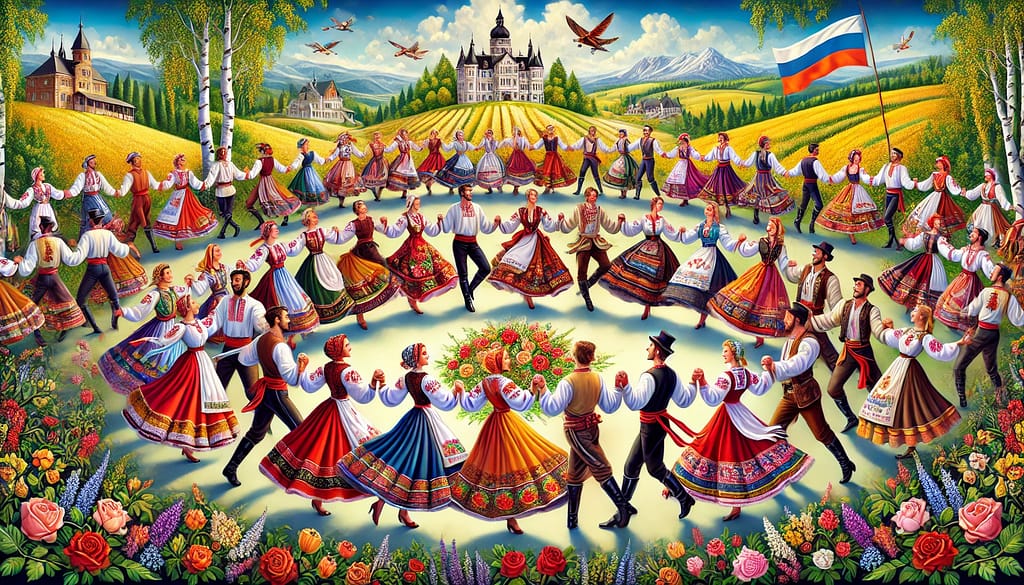
- Circle Dances (Kolo, Horovod): Common across Slavic regions, these involve dancers holding hands and forming circles or spirals. They can range from slow and graceful to fast and energetic.
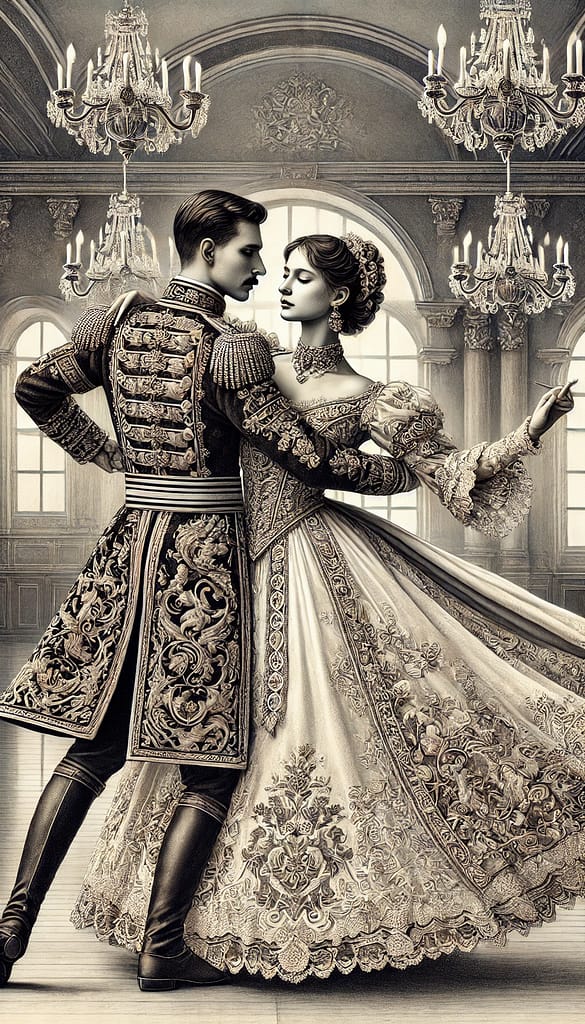
- Pair Dances: These include dances where couples perform intricate steps and figures, such as the polka and czardas.
- Solo Dances: Some dances feature solo performances, often by men, showcasing agility and acrobatics.
Regional Variations
- Russian Dances: Known for their energetic movements and impressive footwork. The Troika and Khorovod are popular examples.
- Polish Dances: The Mazurka and Polonaise are elegant dances that have been adapted into classical music.
- Ukrainian Dances: The Hopak is a highly energetic dance often performed by men, involving jumps, squats, and kicks.
- Balkan Dances: These include the Oro and Kolo, characterized by intricate footwork and vibrant rhythms.
Cultural and Social Context
Celebrations and Festivals: Slavic folk songs and dances are integral to celebrations and festivals, such as weddings, religious holidays, and harvest festivals. These events are community gatherings where music and dance play a central role in the festivities.
Preservation and Revival: Efforts to preserve and revive Slavic folk traditions are evident in various folk ensembles, festivals, and educational programs. Many young people in Slavic countries are learning traditional songs and dances, ensuring that these cultural treasures continue to thrive.
Influence on Modern Culture: Slavic folk music and dance have influenced contemporary genres and are often incorporated into modern performances, including pop music, classical compositions, and theatrical productions.
Conclusion
Slavic folk songs and dances are a testament to the rich cultural heritage of the Slavic people. They offer a window into the historical, social, and spiritual life of these communities and continue to be a source of pride and identity. Whether through the haunting melodies of a folk song or the vibrant steps of a traditional dance, the Slavic folk tradition remains a dynamic and integral part of cultural expression.
5 most known slavic folk dances and songs
The five most well-known Slavic folk dances and songs, combining both elements of music and dance, include:
1. Kalinka (Russia)
Dance: The dance associated with “Kalinka” is lively and often features fast-paced, energetic movements with jumps, spins, and kicks. It is a popular piece in Russian folk dance performances. Song: “Kalinka” is one of the most famous Russian folk songs. Its chorus is particularly well-known and has a catchy, repetitive melody. The song is often performed with increasing tempo, adding to its dynamic nature.
2. Hopak (Ukraine)
Dance: The Hopak is the national dance of Ukraine, characterized by its high energy, acrobatics, and complex footwork. Male dancers often perform impressive leaps, squats, and spins. Song: The music accompanying the Hopak is equally vibrant, often played on traditional Ukrainian instruments like the bandura and kobza. The rhythms are fast and lively, matching the dance’s intensity.
3. Polonaise (Poland)
Dance: The Polonaise is a stately, processional dance often performed at formal events. It features a distinctive rhythm and is characterized by elegant, gliding movements. Song: As a musical form, the Polonaise has been used by many composers, including Chopin, who incorporated it into classical music. Traditional Polonaise songs often accompany the dance, with a strong, march-like rhythm.
4. Kolo (Serbia/Balkans)
Dance: The Kolo is a traditional circle dance found throughout the Balkans, particularly in Serbia. Dancers hold hands and move in a circular formation, with steps that can range from simple to highly intricate. Song:The songs accompanying the Kolo are usually rhythmic and repetitive, designed to match the dance’s steady pace. Instruments like the accordion and tambura are commonly used.
5. Horo (Bulgaria)
Dance: The Horo is a communal dance performed in a circle or line. It involves a variety of steps and can be adapted to different tempos and styles, from slow and stately to fast and complex. Song: Bulgarian Horo songs are known for their rich harmonies and complex rhythms. They often feature traditional instruments like the gaida (bagpipe) and kaval (flute).
Conclusion
These dances and songs reflect the rich cultural heritage of the Slavic people. They are not only popular in their respective countries but have also gained international recognition, often performed at cultural festivals and events worldwide. Each one embodies the unique characteristics of its origin, from the energetic leaps of the Hopak to the graceful movements of the Polonaise.
A ballad that steps in all those dances
Creating a ballad that encompasses elements of all these five well-known Slavic folk dances—Kalinka, Hopak, Polonaise, Kolo, and Horo—requires a narrative that can naturally transition through various styles and rhythms.
The Journey of Slavic Spirits
Here’s a ballad that steps through each dance, highlighting their unique characteristics:
Verse 1: Kalinka (Russia)
In a village by the Volga, where the birch trees sway,
A maiden sings of love, as the skies turn grey.
“Kalinka, Kalinka,” her sweet voice calls,
As dancers leap and twirl in the grand old halls.
Chorus:
Kalinka, Kalinka, oh, my berry red,
Dance with me till dawn, let the joy spread.
Verse 2: Hopak (Ukraine)
Through the fields of golden grain,
where Cossacks ride, The Hopak’s wild energy,
with strength and pride. Men leap high with daring, their hearts ablaze,
While women spin and circle in a joyous daze.
Chorus:
Hopak, Hopak, let your spirit soar,
Dance the night away, on Ukraine’s shore.
Verse 3: Polonaise (Poland)
In the grand Polish manor, where nobles tread,
The Polonaise begins, in its stately spread.
Elegance and grace, with every measured step,
Echoes of Chopin, in memories kept.
Chorus:
Polonaise, Polonaise, with your noble stride,
Glide across the floor, with dignity and pride.
Verse 4: Kolo (Serbia/Balkans)
Among the Balkan mountains, where the eagles fly,
The Kolo’s circle forms, reaching to the sky.
Hand in hand they dance, in unity and cheer,
Every step a heartbeat, every turn sincere.
Chorus:
Kolo, Kolo, round and round we go,
Dancing through the night, with a gentle glow.
Verse 5: Horo (Bulgaria)
In the heart of Bulgaria, where the roses bloom,
The Horo’s rhythm calls, dispelling gloom.
Lines of dancers weave, in patterns bold and bright,
Each step a story told, in the soft moonlight.
Chorus:
Horo, Horo, with your intricate beat,
Guide us through the night, with nimble feet.
Finale: Unity of Dance
Through valleys and mountains, across the Slavic lands,
The dances tell our stories, joined in clasped hands.
From Kalinka’s joy, to Hopak’s mighty leap,
Polonaise’s grace, and Kolo’s bond so deep.
Horo’s rhythmic flow, in unity we find,
A tapestry of cultures, beautifully entwined.
Chorus:
Slavic dances, Slavic songs, echo through the night,
Binding hearts together, in a shared light.
This ballad not only highlights the unique features of each dance but also celebrates the unity and diversity of Slavic culture through their folk traditions.
Multilingual Folk Song Explorer GPT
Engaging and comprehensive folk song guide with interactive and multimedia features.
Multilingual Folk Song Explorer
Make your own folk website online!
Turn your passion into profit today and start your own online journey. Learn how to create and grow your website withna fabulous community and join for free!